The ice cream cone was introduced by Caffè Fiorio in Turin in the 1930s. It was heavily criticized and considered highly inappropriate for ladies and young women who “licked” it on the street, but it immediately became all the rage!


The ice cream cone was introduced by Caffè Fiorio in Turin in the 1930s. It was heavily criticized and considered highly inappropriate for ladies and young women who “licked” it on the street, but it immediately became all the rage!

Undulating, dynamic, inspired by nature, beautiful: whether from their original construction or following renovations in the late 19th century, over seventy historic venues in Italy embraced the Art Nouveau style. Here they are, brought together in an ideal itinerary to be explored for the pleasure of a “floral stop.” The research was conducted for the 2013 edition and has become part of the historical and cultural heritage of the Guide and the Association of Historic Venues of Italy.
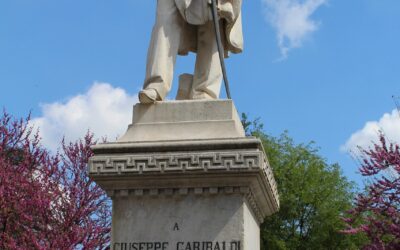
These are the establishments which, during the Risorgimento, witnessed episodes that led to the Unification of Italy. Brought to light by research for the 2011 edition of this Guide, which paid tribute to the 150th Anniversary of the Unification of Italy these stories have become part of the Association’s historical legacy.
At the Caffè Fiorio in Turin—a gathering place for staunch conservatives—on March 18, 1821, they attempted to persuade the court apothecary’s assistant to poison the medicine of Carlo Alberto of Savoy, who had just been appointed Regent and had promulgated the Constitution…