Locali Storici d’Italia

An association founded with the aim of protecting and promoting the hotels, restaurants, and cafés that have shaped our country’s history.

Search for a Historic Venue

Saturday, October 3

National Day of Italy’s Locali Storici

The first Ambassador for Italy’s Historic Venues is the Hon. Vittorio Sgarbi, Under-Secretary of State at the Ministry of Culture

The association

The Associazione Locali Storici d’Italia is a non-profit cultural association that brings together around 200 of the oldest and most prestigious hotels, restaurants, patisseries, confectioners’ and literary cafés – venues that have played a key role in Italian history, both through the events they have organised or hosted and through the illustrious figures who have frequented them.

The Association, which is under the patronage of the Ministry of Culture, has for 48 years been dedicated to promoting and protecting its member venues.

Historic Venues

At least 70 years of operation

Preservation of the original interiors and furnishings (or those that reflect the establishment’s origins)

Collection of artifacts, mementos, and historical documents relating to events and notable figures

At least 70 years of operation

Preservation of the original interiors and furnishings (or those that reflect the establishment’s origins)

Collection of artifacts, mementos, and historical documents relating to events and notable figures

200

associated organisations

175

local average age

46

editions of the guide

Discover the Historic Venues

Turin

Milan

Venice

Rome

Florence

Genoa

Naples

Bologna

Or search in your favourite city

Historical records

Tradition, passion. Stories of families whose lives have been intertwined for generations with their restaurants, cafés and hotels. Stories which, very often, have given rise to products and recipes that are unique and inimitable, the result of intelligence, skill, taste and imagination

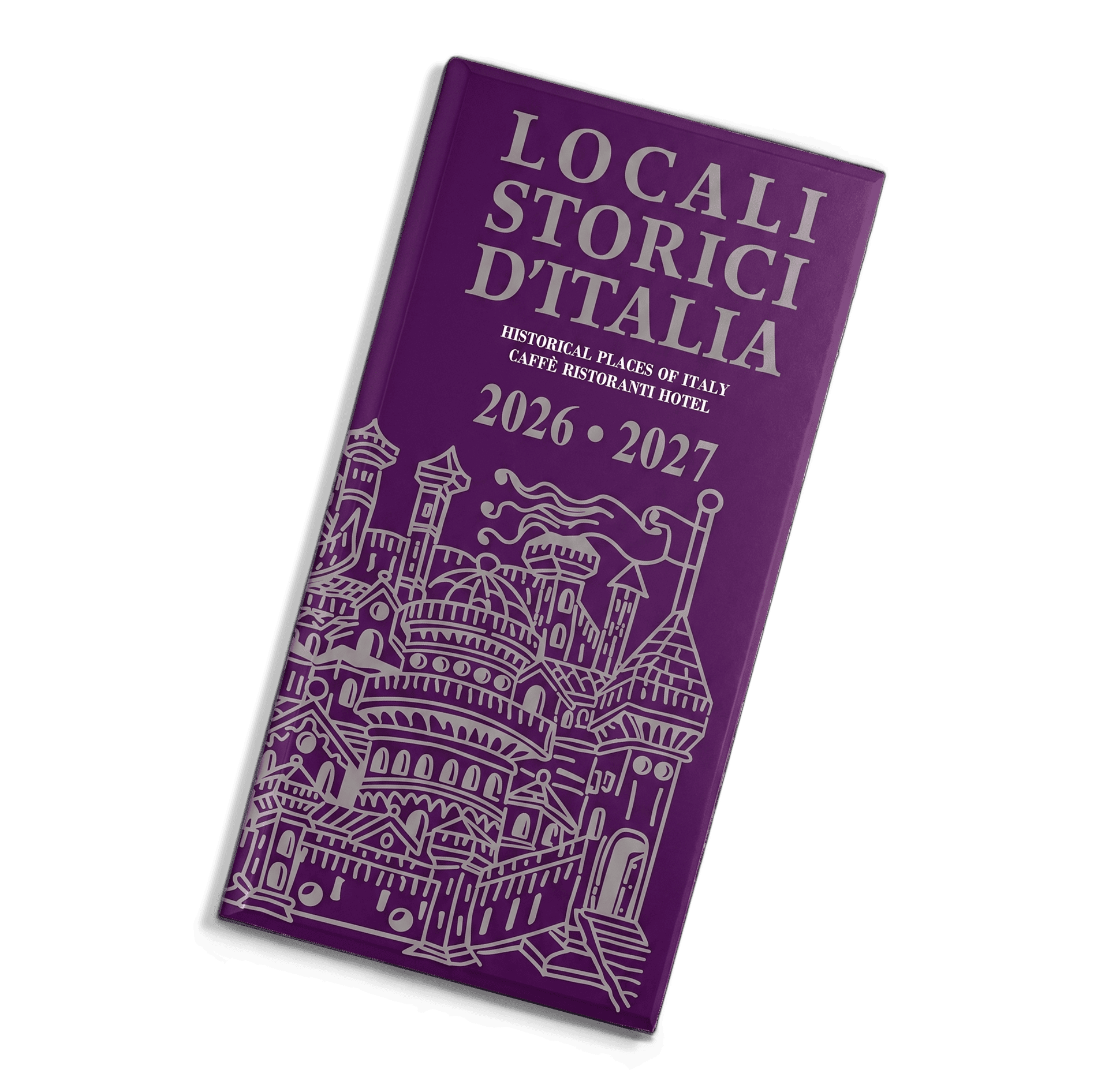
A Guide to Locali Storici d’Italia

New Guide 2026–2027

2026/2027 Between Battles and Bottles: The Story of Our Country Through the “Liquid Testimonies” of Italy’s Historic Taverns

The corridors of time within Italy’s historic venues are paved with anecdotes and legends, where the clinking of glasses mingles with the echoes of cultural revolutions. The new edition of the Guide takes us on a unique journey to discover iconic labels, artisanal liqueurs, and signature cocktails that have been the silent protagonists of battles, political meetings, and memorable celebrations. Discover the stories of daring and identity preserved in the living monuments of the no

Discover the guides from previous years

Every year, the guide to Italy’s Historic Venues focuses on a different topic.

$

Request your copy

Find out how to have the guide delivered directly to your home, whether in Italy or abroad

$

Download our app!

Go to the App Store and Play Store and download our new app for iPhone and Android so you can always have the database of Italy’s Historic Venues with you

Latest news

The closest to soccer

The closest to soccer

In the 1930s, the Ambrosiana-Internazionale team—featuring Castellazzi, Alemandi, De Manzano, Meazza, Faccio, Levratto, Bitto, Agosteo, Cerasoli, Frione, and Serantoni—was a regular at the Antico Ristorante Boeucc in Milan.

read more

The most journalistic

Caffè Gilli in Florence, where Prezzolini used to meet with the editors of the literary magazine “La Voce” between 1908 and 1916; Caffè Mangini in Genoa, which, after World War II, served as a makeshift newsroom for the daily newspapers *Il Secolo XIX* and *Il Lavoro*, with legendary editors such as Cavassa and Pertini.

read more
The most pugnacious

The most pugnacious

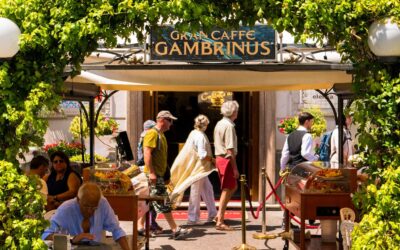
The Gran Caffè Gambrinus in Naples: the family that runs it fought for nearly 30 years to regain the portion of the café that, in 1938, was converted into a bank after a high-ranking Fascist official asked the prefect to close it because the noise coming from the café—which was located beneath his home—disturbed his wife’s bridge game. With a touch of satire, Alberto Savinio, De Chirico’s brother, wrote in the weekly magazine *Omnibus* that “the air of Naples is fatal to fine cafés, just as roses are poisonous to donkeys,” and the regime ordered the publication to be shut down as well. In 2001, the two parts of the Gambrinus were reunited, thus bringing together those splendid rooms that serve as an art gallery housing over 40 paintings by the greatest names in 19th-century Neapolitan painting.

read more